
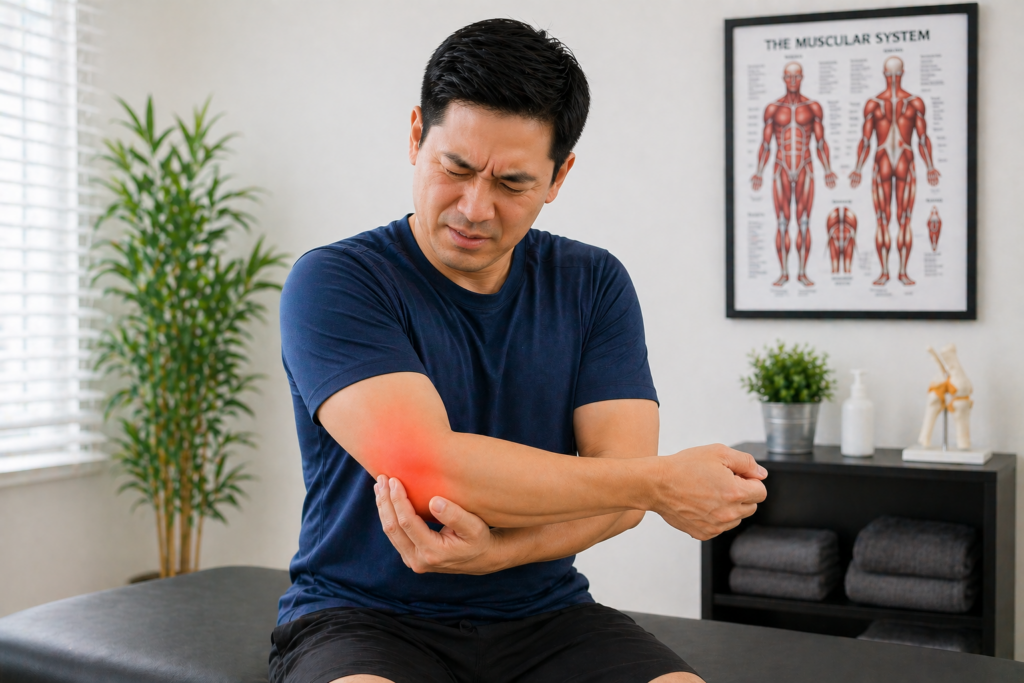
You don’t have to be a tennis player to get Tennis Elbow! Despite the name, only a minority of such cases we treat are actually caused by tennis. The real culprit? Repetitive gripping, swinging, and wrist-extending motions. And this is why, with the growth in popularity of pickleball and padel here in Malaysia, we’re seeing more and more patients walk in our doors with exactly this condition.
What is Tennis Elbow?
Tennis Elbow, medically known as lateral epicondylitis, is an overuse injury affecting the tendons that attach your forearm muscles to the bony bump on the outside of your elbow (the lateral epicondyle). Repeated stress causes tiny tears in these tendons, leading to pain, tenderness, and weakness — typically felt on the outer elbow and sometimes radiating down the forearm.
How Tennis, Pickleball & Padel Contribute
Tennis is the original “offender”. The backhand stroke, especially with a single-handed grip, places enormous stress on the lateral forearm tendons. Poor technique, the wrong grip size, or playing too aggressively after time off are the common triggers for Tennis Elbow.
Pickleball may look gentler, but don’t be fooled. The compact swing mechanics, constant dinking, and firm paddle grip all put repetitive strain on the exact same tendons. Because rallies are frequent and fast, cumulative load builds up quickly — even in casual weekend games.
Padel adds another layer. The padel racket is solid and shorter than a tennis racket, and the fast pace within an enclosed court often forces players to react quickly to balls rebounding from the walls. In these situations, players may end up returning the shot defensively with a flicked and extended wrist, increasing the load placed on the lateral elbow tendons and potentially contributing to Tennis Elbow.
Padel adds another layer. The padel racket is solid and shorter than a tennis racket, and the fast pace within an enclosed court means that players, when caught off-guard, frequently execute defensive wall shots with a flicked and extended w rist. This motion is a direct recipe for lateral tendon stress.
Signs You May Have Tennis Elbow
What Can You Do?
The good news is that Tennis Elbow responds very well to Physical Therapy. Treatment typically includes manual therapy, targeted strengthening, eccentric exercises and load management advice.
The key is not to push through the pain and simply hope that it resolves. Early intervention can often prevent a minor irritation from developing into a chronic condition that takes much longer to recover from. If symptoms persist, seeking professional assessment and treatment can help you return to the sports you enjoy more quickly and safely.

Join us on our journey to a healthier lifestyle

Targeted exercises and specific conditioning programs that complement our Physical Therapy service, in order for you to regain optimal function.
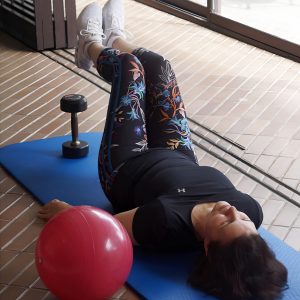
Targeted exercises and specific conditioning programs that complement our Physical Therapy service, in order for you to regain optimal function.
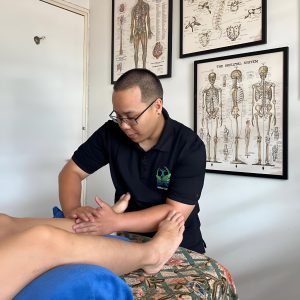
Professional and effective treatment by fully qualified therapists, for:
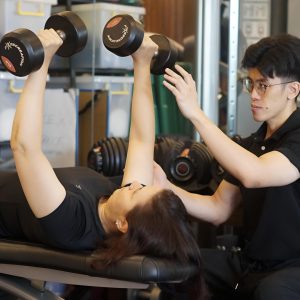
1-to-1 workouts to meet fitness goals and enhance overall performance, with a personalized combination of strength, cardiovascular, flexibility, power, agility and balance training components.
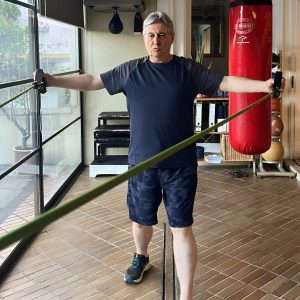
Holistic and age-appropriate exercises to empower seniors, supporting an active, healthy lifestyle and enhancing quality of life. Key components:
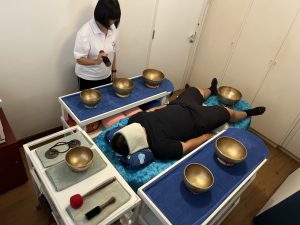
Immersive and therapeutic sounds to promote overall physical, mental and emotional wellbeing.